Blog
How to Build a Competitive Pokémon Team: 7 Steps
· 6 min read
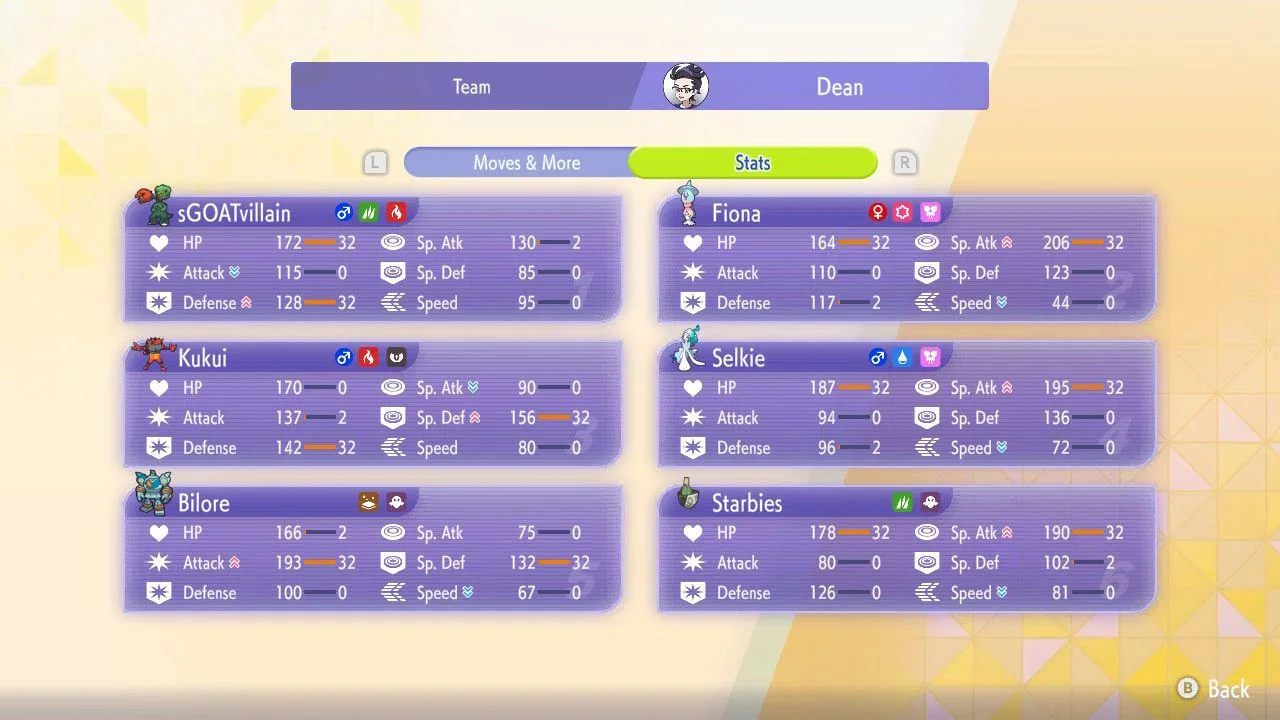
Building a competitive Pokémon team can feel overwhelming. There are hundreds of Pokémon, thousands of moves, and endless combinations of items, abilities, and stat spreads. But good teams aren't built by picking six favorites and hoping for the best. They follow a process.
This guide walks you through building your first competitive Pokémon team step by step, using everything covered in our guides to type matchups, stats, held items, status conditions, weather and terrain, and abilities.
Step 1: Choose Your Format
Before picking a single Pokémon, decide how you'll be battling. The two most popular competitive formats work very differently:
- Singles: Each player has six Pokémon and uses one at a time. The most popular singles formats are run by the community site Smogon, which sorts Pokémon into tiers based on how often they're used. OverUsed (OU) is the standard tier for most players.
- Doubles (VGC): The official format used in Pokémon's own tournaments. Each player brings six Pokémon, picks four after seeing the opponent's team, and battles with two on the field at a time, all at level 50.
Strategies that work in one format often fail in the other. Moves that hit both opponents, like Earthquake, are much more valuable in doubles, while long-term strategies like entry hazards matter more in singles.
The easiest way to start is with Pokémon Showdown, a free online battle simulator. It lets you build any team instantly, without breeding or training, so you can focus on learning.
Step 2: Understand Team Roles
Each Pokémon on a team should have a job. Common roles include:
- Wallbreaker: a hard-hitting attacker that can damage even bulky defensive Pokémon.
- Sweeper: a Pokémon that boosts its stats with moves like Swords Dance or Dragon Dance, then tries to knock out several opponents in a row.
- Wall: a defensive Pokémon that takes hits and wears down the opponent, often with status moves.
- Pivot: a Pokémon that uses moves like U-turn, Volt Switch, or Flip Turn to deal damage and switch out in the same turn, bringing in a teammate safely.
- Revenge killer: a fast Pokémon, often holding a Choice Scarf or using priority moves, that knocks out a threat after a teammate has fainted.
In singles, two more roles matter a lot:
- Hazard setter: a Pokémon that uses moves like Stealth Rock or Spikes, which damage opposing Pokémon every time they switch in.
- Hazard remover: a Pokémon with Rapid Spin or Defog to clear hazards from your side.
Stealth Rock alone can decide games. It does damage based on how weak the target is to Rock, so Pokémon with a 4× Rock weakness, like Charizard and Volcarona, lose half their HP every time they switch in.
Step 3: Pick Your Core
Most teams start with one or two Pokémon you want to build around. This could be a Pokémon you love, a powerful sweeper, or a strategy like a rain team.
Once you have your first Pokémon, look at its weaknesses and find a partner that covers them. The goal is a core: two or three Pokémon that resist each other's weaknesses.
Here's an example. Garchomp (Dragon/Ground) is weak to Ice (4×), Dragon, and Fairy. A strong partner is Heatran (Fire/Steel), which resists all three of those types. In return, Garchomp resists Water, one of Heatran's weaknesses, and can switch in when Heatran is threatened.
This back-and-forth switching is the foundation of team building. When the opponent attacks one Pokémon with a super-effective move, you switch in a partner that resists it.
Step 4: Fill Out the Team
With a core in place, add Pokémon to fill missing roles. After each addition, ask:
- Does this team have hazards and hazard removal? In singles, you'll usually want at least one of each.
- Is there speed control? Your team needs a way to handle fast threats, such as a Choice Scarf user, priority moves, Thunder Wave, or in doubles, moves like Tailwind or Trick Room.
- Can the team deal with setup sweepers? Pokémon with Unaware, Haze, or strong priority moves help stop an opponent that has boosted its stats.
- Are the attack types varied? Make sure no common Pokémon resists all of your attacks.
Step 5: Check Your Team's Weaknesses
Once you have six Pokémon, write out each one's weaknesses and resistances. Then look for patterns.
If three or more of your Pokémon share a weakness, a single opponent can cause big problems. Common examples:
- Several Pokémon weak to Ground, with no Flying type or Levitate Pokémon to switch in.
- Several Pokémon weak to Fire, with no Fire resistance.
- No good switch-in for Fairy or Fighting attacks.
If you find a gap, replace one Pokémon with something that covers it, or change a Pokémon's ability or item. A Flash Fire Pokémon, for example, can turn a Fire weakness into a free switch-in.
Step 6: Choose Moves, Items, Abilities, and Stats
Now finalize each Pokémon's set:
- Moves: Usually one or two STAB attacks, one or two coverage moves, and a utility or status move, depending on the Pokémon's role.
- Item: Match it to the role. Attackers often use Choice items or Life Orb, defensive Pokémon often use Leftovers, and fragile setters might use Focus Sash.
- Ability: For many Pokémon, the ability defines the whole set, so pick the one that fits the role.
- EVs and nature: Most attackers invest fully in their main attacking stat and Speed, with a nature that boosts one of them. Defensive Pokémon usually invest in HP and one defensive stat.
Damage calculators, including the one built into Pokémon Showdown's tools, let you check exactly how much damage your attacks will do and whether your Pokémon survives key hits.
Step 7: Test and Adjust
No team is perfect on the first try. Play several games and pay attention to what goes wrong:
- Is one opposing Pokémon beating your whole team?
- Is one of your Pokémon rarely useful?
- Are you often unable to switch in safely?
Make one change at a time and test again. Over time, small adjustments turn a rough team into a strong one.
Common Beginner Mistakes
- Too many attackers, no defense. A team of six sweepers often falls apart when the opponent hits first.
- Ignoring Speed. Without speed control, fast opponents will knock out your Pokémon before they act.
- No answer to setup sweepers. One Dragon Dance can end a game if your team can't respond.
- Copying teams without understanding them. Sample teams are a great way to learn, but take time to understand why each Pokémon is there.
Final Thoughts
Building a competitive team is a skill that improves with practice. Start with a Pokémon you like, build a core around it, fill in the missing roles, check for shared weaknesses, and keep testing. Each team you build teaches you something new about how battles work.
Use Pokemondatabase.com to check any Pokémon's types, base stats, abilities, and moves as you build, and revisit the rest of our guides whenever you need a refresher.
Related Pokémon Guides
- Pokémon Type Chart Guide: how type matchups, STAB and immunities work
- Pokémon Stats, IVs, EVs and Natures: how base stats, IVs, EVs and natures build a stronger Pokémon
- Pokémon Held Items Guide: the best held items and when to use them
- Pokémon Status Conditions Guide: what burn, paralysis, poison, sleep and freeze do
- Pokémon Weather and Terrain Guide: how weather and terrain change a battle
- Pokémon Abilities Guide: the best abilities and how they shape matchups
Looking something up? Browse the full Pokémon pages, type pages, move pages, item pages, ability pages and location pages on Pokemondatabase.com.
- team building
- competitive
- singles
- VGC
- beginner guide